Nine Board members meet the Minister and the Department of Tourism team. Jet skis, training, diversification, the new STB, GOPs — and what members told the Ministry they wanted.
SHTA Board members meet with Minister Bernstein and members of the Department of Tourism team
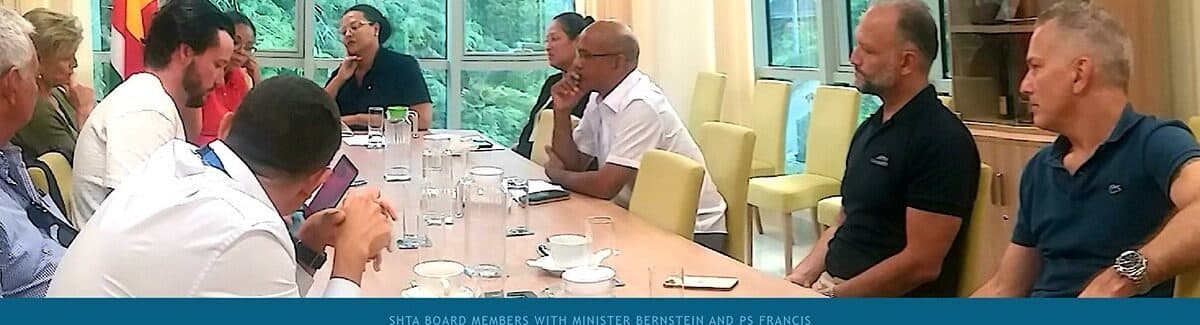
On Tuesday February 3rd 2026 a delegation of nine members from the SHTA Board met with Minister Amanda Bernstein, PS Francis and Ms. Sinon, Ms. Matombe and Ms. Moncherry from the Department of Tourism team.
We are happy to share the main points raised and discussed below:
Concerns over irresponsible use of jet skis
These were shared, with a focus upon jet ski users navigating recklessly, either through excessive speed, intrusion into forbidden designated areas (typically close to beaches), or both.
SHTA Board member Arthur Fourcroy spoke to a modification of an original document worked on by BM Mervyn Esparon and the SMSA. Mr. Fourcroy's proposal is a reduced version which, despite being expressed in fewer words, loses none of the original work's commitment to bringing in new and enforceable controls in the interests of bona fide jet ski operators and other ocean users (in particular swimmers and snorkelers) alike.
Discussions referenced the notion of having jet skis and similar craft only being ridden by 'qualified' people. This raises issues for businesses who currently rent jet skis to tourists without any form of qualification or 'on the spot' instruction. One idea proposed involved having a 'team leader' who oversees a group of jet ski clients, providing initial training regarding safety standards and operational regulations and then remains in charge of the group whilst at sea.
This draft document was shared with the Minister and the matter will now proceed further.
Statutory and post-statutory tourism training
Members will be familiar with the work carried out by the SHTA over the last two years, leading to clear and cogent proposals for the introduction of initial education modules on Tourism for all state school students in P5 and above, leading to Travel & Tourism IGCSE opportunities (SHTA was pleased to hear that this course - which had previously been discontinued - is now being reintroduced at S4 level) A level options and - finally - professional training either at a revamped STA, a private sector academy, or a hybrid institution.
The notion of greater professional involvement in post-statutory (16+) training by the tourism private sector was broadly welcomed, with the possibility of larger businesses nominating 'outreach' personnel who could deliver course components as well as oversee internships.
Regardless of the 16+ model adopted the curriculum would need to be carefully audited and modified in line with industry expectations, standards and competencies.
The end objective is of course to create a cohort of Seychellois graduates with the positive mindset and skill sets required to carve out a successful career in tourism in Seychelles, inclusive of managerial posts. SHTA estimates that even if such a programme were to be introduced this year it would take six or seven years before the benefits in terms of the local labour market were felt. During this period of transition SHTA advocates rapid and effective granting of the GOPs required by tourism businesses while we wait for the fruits of a comprehensive education programme to ripen.
Diversification
SHTA's feeling is that this is far easier to define than deliver. Nevertheless there is a real and new appetite within the Ministry for proactive and realistic approaches which involve artisans, artists, musicians and dancers, amongst others.
The fusion of Tourism with Culture should make this easier to achieve, since the organisations currently charged with - say - creating directories of performers (NACC and Creative Seychelles Agency) fall under the auspices of PS Kalebi, who in turn reports to Minister Bernstein.
SHTA notes here the relevance of the State House bulletin of January 28th 2026, which made reference to… the approval of the repeal of the Seychelles National Institute for Culture, Heritage and the Arts Act, 2021, which will result in the dissolution of SNICHA. Cabinet also endorsed a major reform of the governance framework for culture, arts and national heritage. It authorised the drafting of a new Seychelles Culture, Arts and National Heritage Bill to bring cultural institutions under stronger ministerial oversight within the Ministry of Tourism and Culture. Cabinet further approved the re-establishment of the National Monuments Board under the Seychelles National Monuments Act (1980) and the revised structure of the Culture Department to strengthen policy leadership, accountability and operational efficiency.
Another bulletin referenced the establishment of a committee for the reform of Culture. So… we can expect to see much more being discussed regarding viable pathways for the development of cultural tourism and other diversification strategies over the next few months, but as Minister Bernstein commented, there remains much work to be done on this.
The new STB
The Minister and PS gave an update on the ongoing resuscitation of the Seychelles Tourism Board, soon to be brought back from enforced limbo with a new Board and CEO (yet to be announced). The relevant legislation needs to be presented to the National Assembly, following which a launch time line will be drawn up and shared, with April being suggested as the earliest commencement time for the new organisation to meet.
The Minister indicated that much of the 2026 agenda has already been agreed, including budget allocations, and confirmed that previously determined commitments will continue without disruption. She drew an analogy with a relay race during which the baton is passed from one body to the next whilst both are running.
Once these pre-existing obligations are exhausted the new STB will take full responsibility for strategic marketing planning; the budget for this will be reassigned to the STB. In May the 2027 budget will be determined, and the new Board will have full control over this. The Board will oversee an ongoing review of international presence and profiling, inclusive of national representatives.
GOPs
Recent consultation meetings with SHTA members confirmed that the provision of GOPs continues to be a problem for many businesses. The Minister has previously (in conversation with SHTA - Update January 9th 2026) spoken about the need to work closely with her counterpart in Employment in order to support the ongoing competitiveness of our tourism sector, and nothing stated at the February 3rd meeting contradicted this. We hope for a sustainable and beneficial (to the nation) collaboration between the two ministries.
Consultation meetings
The Minister confirmed that she had convened numerous meetings with key stakeholders in her first period in office and confirmed that such feedback from the private sector will inform policy at the Ministry. She referenced a number of topics arising from her interactions, including…
- cruise ships,
- public toilet facilities at popular tourist spots (the lack of),
- the need for greater diversity at food outlets (particularly for vegetarians and vegans),
- the need for greater enforcement around illegal operations (including unlicensed accommodation and noise management),
- the timing of GOP processing,
- how VAT is applied to restaurants,
- street lighting (lack of),
- safe pavements (lack of),
- online payment portals,
- public health issues,
- support for some smaller establishments regarding new technology and online booking systems,
- security of financial transactions and the need to off-set risk using payment portals,
- the need for more information for tourists regarding how we keep them safe whilst they are our guests, eg presence of stingrays.
The issue of a potential generic cancellation policy for licensed accommodation providers was discussed. From the DoT side it was expressed that there exists a perception that cancellation policies will harm business, but this is not the case in their opinion. Conversations on this, and other issues, will continue throughout the year; perspectives differ depending on where individuals sit within the sector and all points of view can be considered before any final proposals are drafted. A report is being compiled.
Could we introduce a national booking platform? This arose from concerns (ongoing) regarding the operational practices of Booking.com, which currently holds a dominant position in the market, particularly affecting smaller properties.
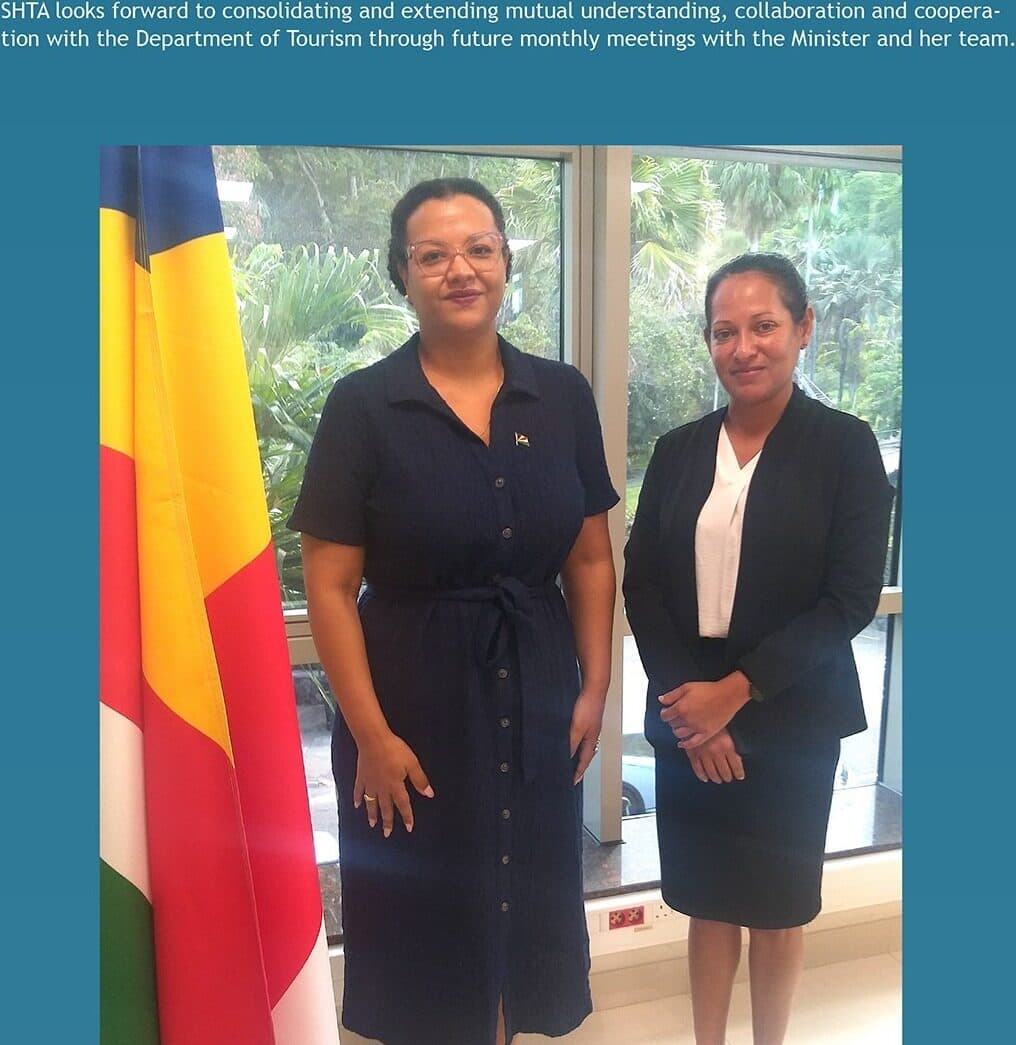
SHTA looks forward to consolidating and extending mutual understanding, collaboration and cooperation with the Department of Tourism through future monthly meetings with the Minister and her team.
Sunway le Cordon Bleu Institute of Culinary Arts, Malaysia, visits Seychelles
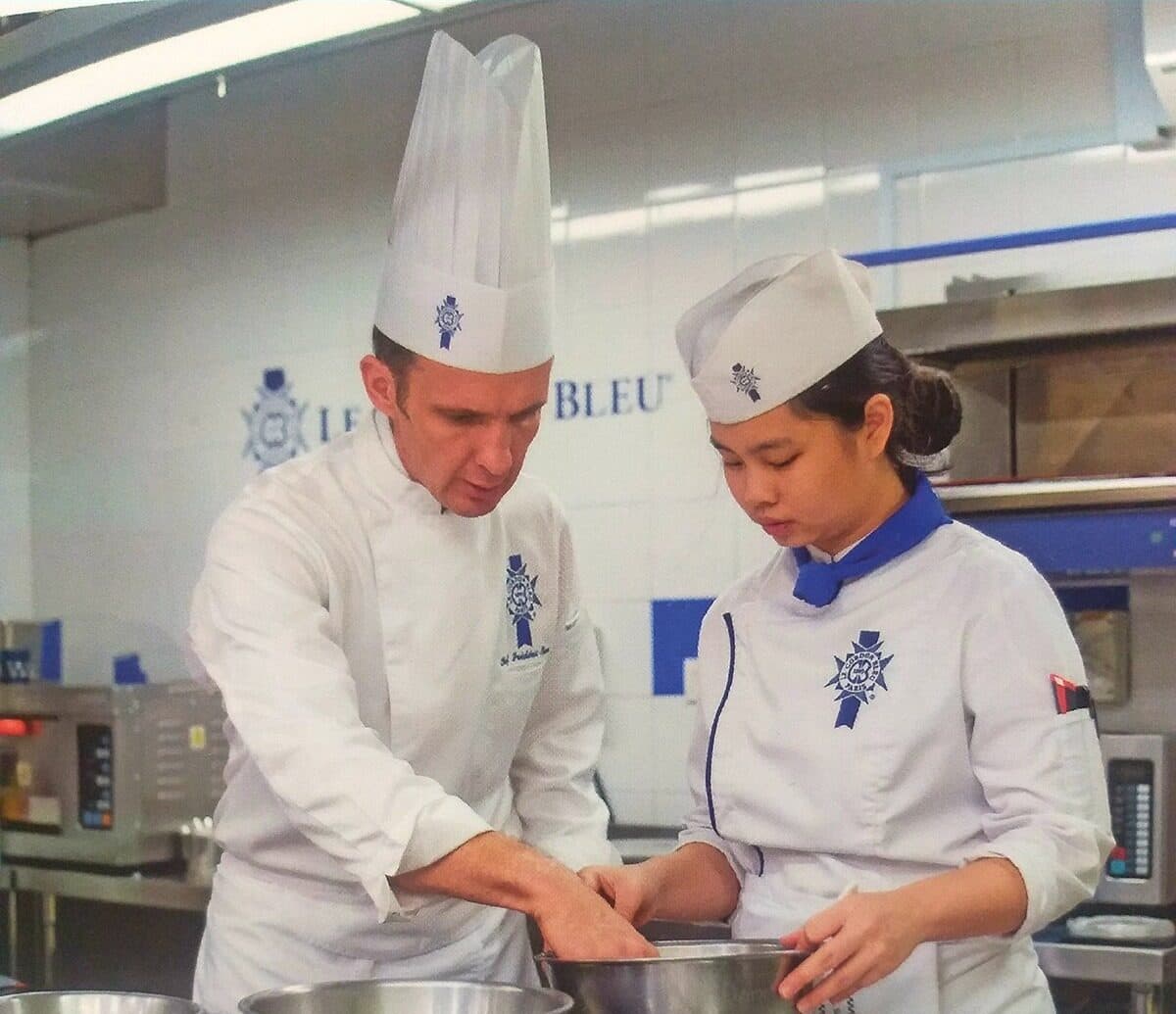
Tuesday 3rd February 2026 saw a gathering of tourism professionals meet at the STE auditorium to hear Ms. Ming Ho give a presentation about the Cordon Bleu Institute (run collaboratively with the Sunway group) in Malaysia.
This event was well timed to coincide with ongoing and intense debates in Seychelles about training options for young Seychellois after they have finished school.
Ms. Ho described Malaysia as a 'Pot Pourri' of gastronomy, and promoted the country as welcoming, stable and affordable. She touched on the manner in which the Institute's good relationships with Immigration facilitate comfortable student visa processing.
Once enrolled in one of the programmes on offer the cost of living is relatively low - certainly when compared to Seychelles. The state of the art facilities are located in a suburb close to Kuala Lumpur, with good quality accommodation and shuttle buses (FOC) delivering regional connectivity. The school, its ideology, training protocols and most of its lecturers are of French origin. F&B techniques are interpreted substantially, but not exclusively, through French recipes.
Cordon Bleu has been operational for 125 years and, Ms. Ho stated, combines respect for tradition with new technologies and culinary developments.
The programme options are as follows:
- Dip de Cuisine — 12 months (9 months in college, 3 months internship), three semesters: Basic (3m), Intermediate (3m) and Superior (3m), followed by internship.
- Dip de Patisserie — 12 months, same format.
- Dip de Boulangerie — 12 months, Basic Certificate leading to Advanced Certificate.
- Dip in Plant-Based Culinary Arts — Cuisine (3m, 280 hours of instruction) and Patisserie (3m, 280 hours of instruction).
- A Grand Diplome is also on offer, which requires a combination of both the Dip de Cuisine and Dip de Patisserie (2 years in total, covering 600 recipes).
Overseas trips to France and Spain are offered (annual immersion tours), and flexible payment plans are in place for those eligible.
The internship programmes are, Ms. Ho said, excellent - students are well prepared. There is a back-up student counseling service available. The student to teacher ratio is a very comfortable 16/1.
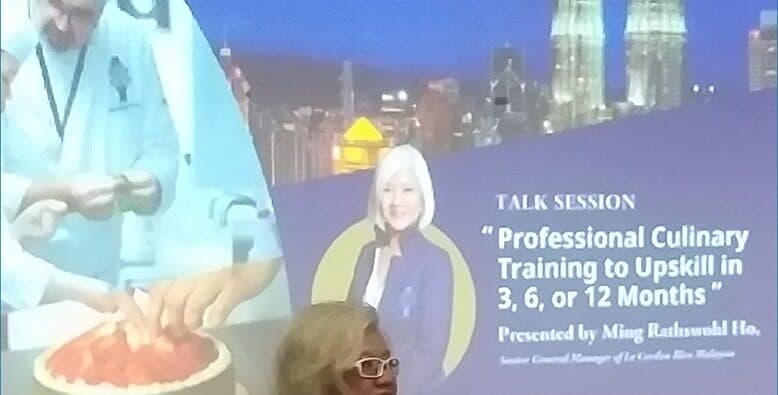
Ms Ho's presentation included impressive videos featuring lecturing chefs and modern commercial teaching areas. Courses include theoretical and practical content. All equipment used is professional, not domestic.
SHTA investigated the fee structure online and calculated that the total cost for an international student taking a full one year Diploma course would be circa Euro 36,000 excluding flights but inclusive of accommodation and personal food, beverage and social budget.
This bulletin was sent to SHTA members on 21 February 2026 and is reproduced here in full. The original as it was designed and circulated is below.
Download the original (JPG)