SHTA sits down with the Minister at Botanical House on 30 December 2025 — on the reformed STB, training, GOPs, the environmental levy and Booking.com.
In conversation with Minister Amanda Bernstein
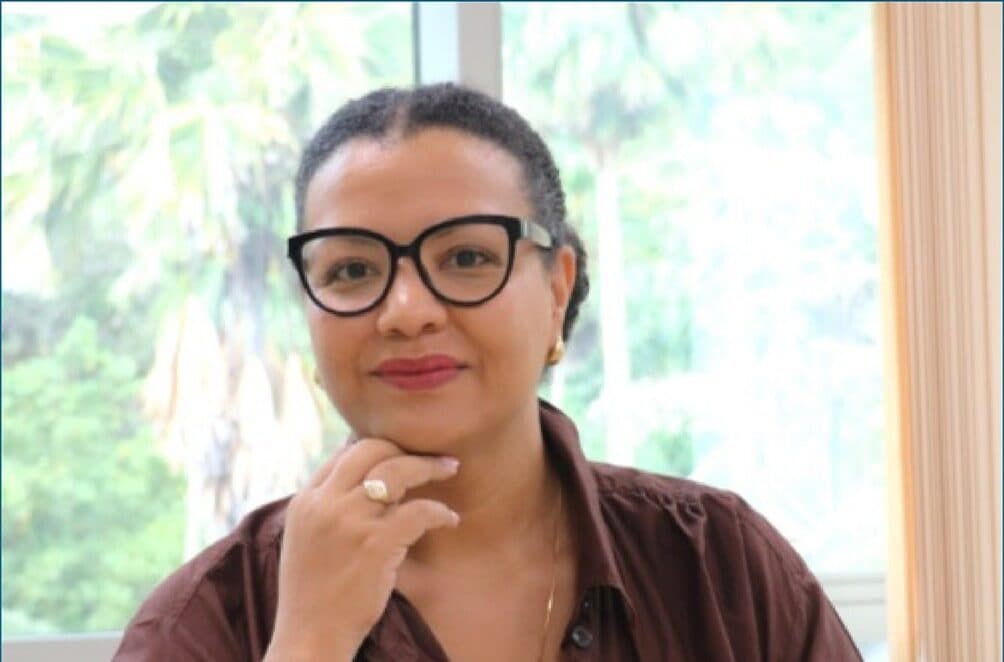
SHTA was very pleased to have a 'sit down' with Minister Amanda Bernstein at Botanical House on Tuesday December 30th 2025, during which the Minister spoke about her evolving aims and objectives for the Ministry which she heads, and the manner in which private and public sectors can strengthen their ties and work collaboratively for the good of Seychelles.
Minister, can we begin by talking a little about the 'new' STB? The Press Release from State House announcing the reformation of the Seychelles Tourism Board said this: 'The Seychelles Tourism Board establishes the STB as an independent body for marketing and promoting Seychelles as a tourism destination. STB will absorb the Destination Marketing Division, the Department of Tourism will continue with policy and regulatory functions'. How do you interpret the term 'independent' — and how do you see the 'new' STB functioning?
I think that the revised STB is really about bringing the private sector back to the table, to have a buy-in and a say in how our destination marketing - both internationally and locally - is done; the operations of the Board will be primarily driven by this objective - an objective that requires dedicated focus. The intention behind the new Board is to deliver this. The STB will be governed by its Board, with members at the forefront of marketing strategy being the ones to devise plans, with due consultation with the Ministry. I see a collaborative relationship (between STB and the Ministry). I don't see a 'control and hold' approach coming from us. The marketing of our destination should be the focus of the STB's attention and not watered down by any other considerations or competing for focus with other things. I also see a lot of collaboration with Culture, whereby we can compile a compelling calendar of activities. This is why the choice of the term 'independent' is correct, with the Board bringing the voices of the marketing team and the private sector together.
Will you sit on that Board?
I will not. As Minister we will have collaboration, but this Board will begin with consideration of some of the work already done for the coming year and operate in a period of transition before taking full control of deliberations.
What mechanisms do you envisage developing in order to maximise a private/public sector interface which can address key issues other than marketing?
Since taking up this position, I have been on a listening journey with our private sector tourism and culture stakeholders. My focus has been on meeting with as many people as possible to hear their perspectives from where they sit in the industry and it continues to be incredibly insightful. It has become clear that we need to explore appropriate mechanisms to facilitate more in-depth engagements within the sector as well as across other Ministries and agencies. As soon as we have had the opportunity to unpack this, we will be reaching out to share our proposals.
So within this context of collaboration and cooperation can you say something about how you see the relationship between you and your team and the SHTA developing over the next few years? How can we best help each other and in so doing help Seychelles?
Well, I think that the private sector continues to be incredibly vital to any and all conversations around tourism, and this input enables what the government needs to deliver. So it is important that we at all times keep this dialogue open, and at all times ensure that it is responsive to the needs of the sector, being constantly mindful of longer-term vision and planning when key issues such as diversification, building resilience and securing the future of the sector come into play. I feel that these objectives are very much in line with what the communities want to see, starting with successes and gains and growth now, and then seeing this progress consolidated and extended down the line.
Making this fit for purpose now and making sure that we have what we need to meet the evolving needs of travelers and consumers is our priority; we see that there are global shifts in these needs and we have to be agile in our responses. So our conversations are very important because you are the people on the front line; you are the people who get the immediate responses from the client, you can assess directly the impact of the Seychelles experience upon that traveler, and manage their expectations from arrival to departure. The communication which underwrites this is not optional; rather the conversations are, and will continue to be, essential. We don't want to have a disjointed policy formation department - decisions have to be informed by the realities of the tourism sector.
Yes, and the relationship can be extremely productive, bringing two approaches together; for example as far as we know nobody in the Department of Tourism has recent experience of running hotels or a DMC, so policy and strategy can be 'stress tested' through sharing ideas prior to their implementation with the private sector, of which the SHTA is the main representative body. Similarly SHTA has the utmost respect for those working in an administrative capacity in government.
My intention is to listen as much as possible and be informed by those experiences, which can bring different lenses together - for example a large hotel might have a different perspective to a medium or small property. Can these perspectives all be taken into account? Yes. But can all of their different needs be met? Probably not. For example there will be different opinions on issues such as continued growth. But the aim is for all partners to have a voice and a say and thereby inform our understanding of the tourism landscape. The Ministry's job is to devise strategy which secures the future for us all. So whilst we may have at times slightly different objectives to our partners in the private sector the two sides must not be mis-aligned.
When it comes to policy you have to be both reactive and proactive. Do you lean to one side of this fulcrum or the other regarding the manner in which you intend to steer the Ministry?
This is where I think the STB is going to play a very vital role, in terms of analysing and understanding trends and global shifts. We have to ask how are the expectations and behaviours of people changing - what more do they want? Today's long-haul traveler expects more authentic and experiential outcomes. And we need to be resilient and deploy lessons learned from past experience alongside fresh innovation in order to meet or surpass these expectations. We are never going to be a mass market destination, so what does the alternative look like, with economic growth which does allow for economic expression and delivers growth which then trickles down and out from the traditionally defined tourism sector, feeding a wider ecosystem. It's got to be a happy marriage between global trends and what our islands can actually deliver and sustain.
We have wonderful products across the spectrum of private sector operations which appeal to the requirements of a broad band of different travelers, and by having such a great range of high quality establishments - large and small - we can give potential visitors the luxury of choice and the ability to discriminate in the interests of finding the 'best fit' for them. What is important is that they are going to leave with a great impression of the Seychelles regardless of the specific character and size of their accommodation.
STA, or some kind of alternative post-statutory training facility, is central to the future of the tourism sector. You have mentioned the importance of sustainability and authenticity in tourism. Do you see higher level training as being able to deliver graduates with the skill sets, appreciation of the importance of high service standards, and the mind sets demanded by the sector, as well as the ability to act as ambassadors for a genuine and authentic Seychelles?
We don't have a choice; we have to figure it out. We have to make it work and if that means getting the private sector more involved in vocational training then that's what we should do. Human capital development is not optional, and this is something which I am focussed upon going forward. We have to ask how STA fits into national human development plans. People need to be able to identify successful and viable careers in the tourism sector; but there's work to be done in order to establish a passion for working in hospitality. There are some programmes which are working well and offer hope - the tourism clubs in particular, which many of your members have supported - and when I talk with young people I am convinced that starting a hospitality programme when they are young is really important. You have to love people and understand the importance of service and you've got to begin when young, so we've got to look at ways of further opening up hospitality as a career option for young Seychellois. Our young people deserve to have a grasp of the sector before committing to any further training; they need to appreciate what they are taking on and we can't do this without the support of the private sector.
I agree that we can't send young people on a blind date with tourism, and of course tourism clubs help to avoid this, but can I also ask you whether you intend to work with your counterpart in the Ministry of Education in order to introduce formal curriculum modules on tourism; starting with upper primary and then continuing through secondary Travel & Tourism courses, and on to A level?
I have seen the valuable recognition given to tourism club attendees, with students receiving prizes and clubs and their leaders being highly valued for the work that they do. Students hone their skills, get exposure to the sector and are engaged in something explicitly valuable. They wear their club shirts sponsored by businesses with great pride. So tourism clubs definitely have a role to play, especially where sponsoring partners have really come to the table with support and enthusiasm. Additionally, working with the Ministry of Education is absolutely essential and we will do that piece of work. It would be premature for me to say what the end goal might look like, but having conversations about human capital needs for the sector and where this correlates with the school curriculum is important. And this is where the inter-sectoral work will be significant, with Education, Employment, Health (and more) removing the notion of Tourism working in isolation.
One of the other things that excites me within the Tourism Department is some of the work they are doing around product development with the local communities, offering experiences which our visitors can access when they visit Seychelles. Yes we have sun, sea and sand but what else can we offer them - what workshops and activities, what places can they visit on a rainy afternoon which will be enriching within a cultural context? We have massive developmental potential here, but we need to focus in assisting artisanal groups, cultural groups, agri-tourism - for example HH Farm, which Lospitalite recognised through an award recently - and a host of other related activities. If we can replicate best practice in a hundred other locations we will have created a really dynamic and memorable experiential landscape for our visitors to enjoy. We need to exude our Creole values in all the right ways and at the right times, and we have to do this both within the tourism sector and outside it.
Yes, and there are two different things going on here perhaps - when tourists arrive they discover that they can do this, that and the other, which is great. But we have been less successful at saying 'come here so that you can do this particular thing', whether it be bird-watching, making Creole dishes or experiencing a cultural event.
That's bang on; there are two different approaches. And it's important to communicate that, in order to participate in tourism you don't necessarily have to manage rooms and beds, but rather that with innovative ideas you can participate and create additional revenue streams as well as contribute to the diversity on offer for our visitors. And we have to make sure that the landscape is conducive to this kind of thinking.
Thank you. Can we now turn to GOPs. There is probably no need to go over the well-rehearsed problems many tourism businesses have experienced with delayed or refused GOP processing costing them money and expertise. Suffice it to say that it has been extremely problematic. How do you see your relationship with Employment in terms of massaging their reluctance to issue GOPs in a logical and timely manner, especially during the next few years during which, hopefully, education and training programmes will begin to deliver suitable Seychellois graduates?
There is certainly work to be done with my fellow Minister in terms of us talking about what policies and processes really support the broader ambition of human resource development. The system is geared up to support the right things in the right way, but without offering an avenue to short-cut the investments we need to make into people as well. I had conversations on Praslin recently with medium sized properties about how they might work together to exchange staff and talent and provide cross-exposure in, say, different departments, thereby beefing up the skills and the longevity of the staff that they are investing in. This is one of a multiple of avenues to explore when we look at sustainable growth in the number and quality of staff that we have. And this is not just talking about foreign staff.
Another concern from the SHTA side has been the manner in which the environmental levy has been collected, with property staff press-ganged into becoming unofficial (and unpaid) tax collectors and property owners having to cover costs of staffing, absconding tourists and credit/debit card commission fees. Do you think that this might be looked at again and this burden removed from tourism professionals by validating the collection of the levy through Travizory?
We are very pleased that we have been able to make the recent amendment (tourists staying at small properties are now exempt from paying the levy; amendment S.I. 90 of 2025) — we have considered the burden that has been placed upon smaller properties and responded. I think that this is a first step; the fulfillment of the promise made by government. Any additional pieces of work or conversations that need to happen, inclusive of feedback from the private sector is certainly something that will be ongoing, but right now I don't have any confirmed timeframes of commitments that I can share about the future of this.
Minister, do you have anything to say about Booking.com, which has a stranglehold on so many of our businesses?
I am in the process of still being briefed on this matter, and I have homework still to do here. So it would be presumptuous for me to comment on this right now.
Thank you Minister for your time this morning and for sharing aspects of your vision for the tourism sector of Seychelles. SHTA looks forward to working closely with you and your team in order to realise the objectives that you have touched upon this morning.
This bulletin was sent to SHTA members on 9 January 2026 and is reproduced here in full. The original as it was designed and circulated is below.
Download the original (JPG)