
The Roundtable focuses on bridging the gap between what we need, in terms of money, to tackle climate change here and what we have.
Climate Finance Roadshow
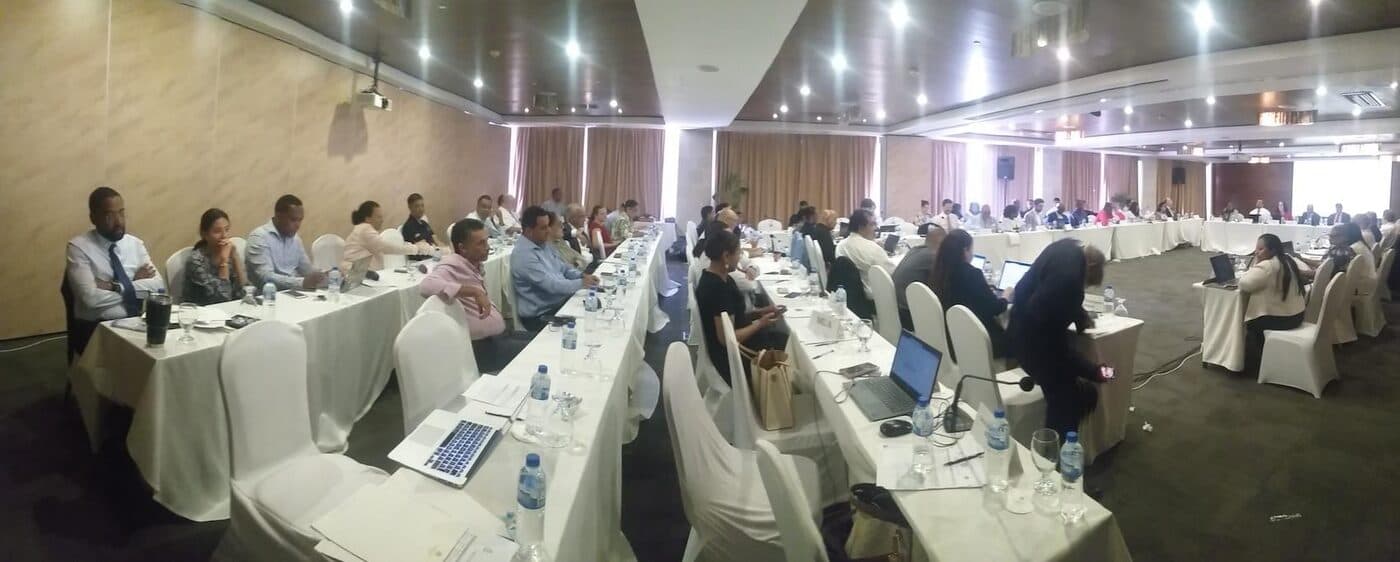
Climate change is impactful in numerous ways, but it certainly has the potential to cause the most serious problems to tourism sectors globally, Seychelles included. So SHTA attended the Seychelles Climate Finance Roundtable on February 24th with interest, particularly as the tourism sector was referenced in the materials disseminated ahead of the conference.
The event was opened by the Vice President, Ahmed Afif, who – in an appropriately polite manner – broadcast some home truths, amongst which delegates heard that…
- Seychelles is suffering disproportionately from the actions of larger industrialised nations.
- In terms of carbon emissions Seychelles produces one two thousandth of 1% of the global total, negligible by any measurable yardstick.
- The sea grass meadow located in Seychelles waters and the size of Switzerland, absorbs emissions to the ratio of 18-1, meaning that we are a negative emitter of carbon gases and contribute to cleaning up the mess made by other larger nations.
These are facts which could usefully be shared with tourists, perhaps as part of an information pack which they receive when paying their environmental levy. Unsurprisingly the VP suggested that it is the moral duty of other nations to support Seychelles in its efforts to mitigate the impact of their actions upon our environment (and, potentially, our key economic sector – tourism). He anticipated and countered the old argument often levied at Seychelles – that we are statistically a 'rich' country, with high per capita income, by pointing out that our cost factors when creating infrastructure such as airports and ports, are multiples of those borne by other nations within the context of cost per capita.
After this bout of straight talking the rest of the first session lacked impact, with World Bank and IMF representatives saying all the right things in the usual vague way.
At coffee SHTA was asked whether private sector tourism companies would be prepared to contribute to national projects designed to mitigate climate change. Clearly SHTA cannot speak on behalf of individual properties but did point out the context of 2% turnover tax imposition and the environmental levy, the spending of which remains a mystery, not only to tourism professionals but the tourists who pay it and have a reasonable right to ask what their money is being spent on. SHTA asked whether the Ministry of Agriculture etc is aware of what the levy revenue is being spent on. The reply was in the negative. SHTA's understanding is that the revenue ends up in the generic 'pot' of government revenue, making discrete analysis of spend difficult. Theoretically the environmental levy paid by, for example, a German family holidaying in Seychelles, could go towards the salaries of ministers. If we are wrong on this we would love to be corrected with the detail on levy spend, which we have requested several times.
Session two continued to give a platform to the authorities, namely the ministries of Finance, National Planning and Trade (where the interesting claim was made that visitor numbers for 2025 will be at least 3% higher than last year), and Agriculture, Climate Change and Environment. Islands Development Company also presented photographic evidence of destruction caused by climate change to the islands which it manages. So far, a lot of problems, mostly already known to the tourism sector, but no answers. And when suggested solutions did come they were invariably from the private sector. The notion of a donations pipeline was raised, with the need for a feasibility study on this advocated. There was also a proposal of assistance from the Arab world, which might be delivered on a 'concessionary' basis. Both positive contributions.
IMF asked what the private sector is doing to contribute, stating that it should, and was quickly told (by IDC) in response to her statement - typical of an incoming 'expert' who has only been briefed by government – that indeed the private sector has, and is, contributing, especially where a resort is located on a vulnerable outer island.
In summing up, the IMF stated that;
- economic growth is likely to slow over the medium term and remain vulnerable.
- to maintain a growth path climate-related investments are essential.
- public investment will continue to be limited by capacity constraints (not enough money, in plain English).
- the country's credit rating needs to be enhanced.
- again, private sector, as well as multilateral and bilateral support will remain essential to progress.
World Bank then submitted that Seychelles is the 73rd nation to be the subject of a Country Climate Development Report; that when completed this report will seek to synthesise all aspects of the issue, considering past action and recommending future measures, inclusive of financial instruments needed to fund mitigation and adaptation strategies; and that the climate finance gap for Seychelles is just under $80 million, converting to a 'real' shortfall of $38 million. The question is where this can come from. World Bank had some ideas: pension funds and insurance companies could contribute $27 million per annum, and the banks, holding 63% of their balance sheets in liquid assets, could contribute $23.6 million through mobilising assets — obviously funds and banks will only do this if the risk is acceptable. A further proposal was that private sector beneficiaries of coastal erosion projects, dive centres and beach-front resorts specifically mentioned, holistically contribute $10.8 million per annum.
British High Commissioner Jeff Glekin asked about how to optimise the money coming into Seychelles from external sources. Initially nobody showed much appetite for responding to him, but eventually the World Bank stated that there is not much money in any case and that their role is to inform and influence policy, inclusive of the 'leveraging of the private sector'.
This was very much the theme of much of the day – that financial solutions need to be generated to an extent 'in house', with government and the private sector providing funding which complements external funds. It's unfortunate that the common sense solution hinted at by the VP at the start of the day falls outside this – namely that large, wealthy nations should accept their responsibility for the negative effects upon Seychelles of the climate change brought about by their actions, and that they should pay for whatever is deemed necessary to put the damage right. All of it. Without compromise.
There were positive interventions from the floor, with indications that an Arab consortium would be open to providing loans and technical support (the second in the form of a grant). This could be great for smaller tourism businesses in Seychelles. One major bank raised questions about the viability of investment in alternative energy bearing in mind PUC's limited ability to absorb independently produced energy into the grid (currently capped at 15–20% due to grid problems). The point was also made that if this bar was raised how would the government cope with the loss of considerable income generated by a diesel-burning PUC.
One of the most interesting ideas was posed over lunch, when it was suggested that resources held by Seychelles (such as the sea grass which cleans up the carbon emissions of other countries) should be regarded as a planetary treasure and the country rewarded accordingly. BHC Glekin mentioned assistance given in recognition of the environmental importance of the rain forests in South America, in other words, with forest owners being paid not to develop forest areas but simply to leave them alone. This is the kind of practical suggestion that the day would have benefitted by having more of.
At the close of proceedings an astute question was asked from the floor; “what has been achieved today and what financial resources have been mobilised”? This was pretty much ignored by our external experts, or rather it was smothered in platitudes and vagueness about “working together in the coming months”.
But let's give a final mention to Vice President Afif who, whilst closing the day's proceedings, issued a robust and welcome defense of tourism, stating that, whilst some advocated raising money through the further taxation of tourists he was against this, fearing that this would lead to a further downturn in our ability to compete in an increasingly difficult market. The VP said; “the countries who caused the damage should pay – tourists are already paying enough.” These are important observations from our new Minister of Finance. Mr. Afif also promised SHTA that he would soon present environmental levy revenue and expenditure data, pointing out that in general terms the annual amount raised through the levy (allegedly $10 million) does not even cover the expense of keeping the three main islands clean ($15 million).
The Vice President's comments, at the opening and closure of the gathering, were like bookends of common sense either side of a collection of miscellaneous romantic novels.

What next?
Members will have heard about changes to the manner in which SHTA will be communicating to you this year. Updates will continue to reach your inbox, providing news on developments which affect the tourism sector, as well as coverage of events which many members will not have been able to attend (this edition is an example).
Additionally SHTA will be sharing all and any invitations it receives from government or outside agencies to attend events or workshops. You will have already received an email explaining how members other than Board members can get involved and attend events which directly affect their businesses.
SHTA will also from time to time share raw data with you, for example the numbers which are generated by government (or others) regarding visitor arrivals and yield.
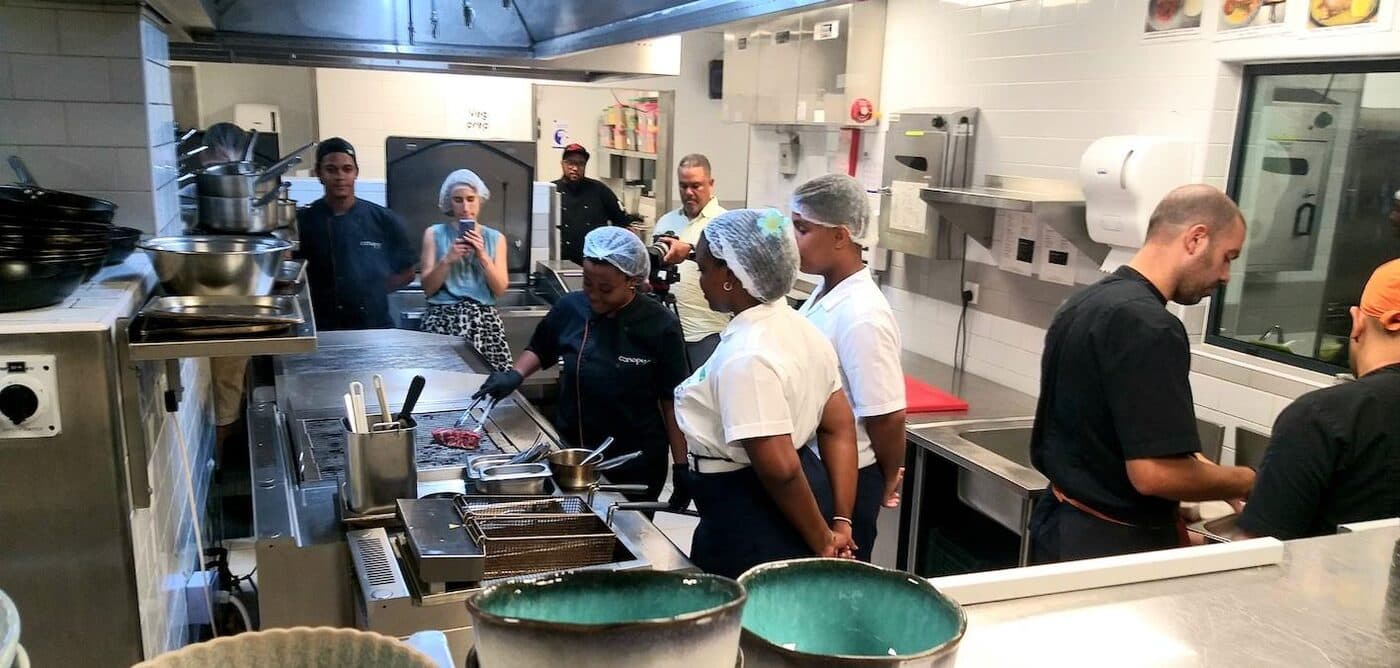
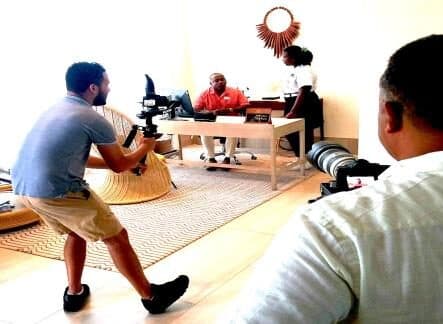
Finally, SHTA hopes that you have been enjoying the features which we publish in The Nation every month. Members will receive these features one week ahead of publication in the newspaper. SHTA is also producing television features which will promote tourism as a viable and interesting career for young Seychellois. These short films will be shown by SBC at prime times and will hopefully make a contribution to solving the long-standing problem of an inadequate (in terms of meeting the sector's employment needs) local workforce.
The first three features will feature three aspects of hospitality; F&B, Reception and Front of House, and Housekeeping. Once again SHTA is working with Toulebox, the company which delivered SHTA's two national awareness campaigns, 'We Are Tourism' and 'Tourism – Wi!'.


This bulletin was sent to SHTA members on 28 February 2025 and is reproduced here in full. The original as it was designed and circulated is below.
Download the original (PDF)